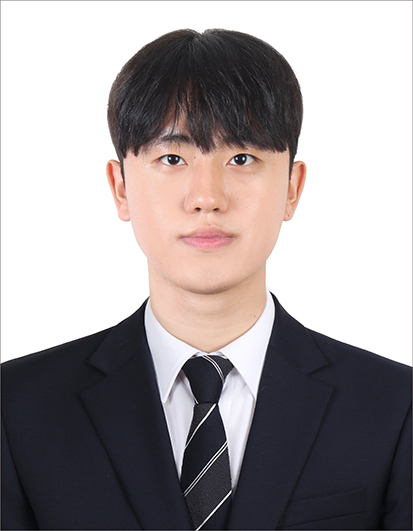
Portrait of Seonghun Jung

Seonghun Jung

M.S. Student, School of Computing, KAIST · CASYS Lab

About

I am a third-semester M.S. student in the School of Computing at KAIST, advised by Jaehyuk Huh at the Computer Architecture and Systems Lab (CASYS). I obtained my B.S. in Computer Science and Engineering at Sungkyunkwan University, where I was fortunate to work with Euiseong Seo on GPU resource scheduling for distributed deep learning on Kubernetes-based cloud platforms.

Research Interests

Publications

  1. Beyond LLM Serving: Characterizing Vision-Language-Action Workloads for Embodied AI System Design
    Seonghun Jung, Sieun Moon, Jiyoung Jeong, Jimin Lee, and Jaehyuk Huh
    ASPLOS 2027 (To Appear)
    Paper summary

    Problem. VLA inference operates within a robot’s control loop, making latency, energy consumption, and task success joint concerns for system design.

    Approach. We characterized four VLA architectures on an edge GPU server and two onboard SoCs through stage-level profiling, roofline analysis, DVFS sweeps, and 43,200 closed-loop episodes.

    Findings. Model architecture and hardware balance jointly determine stage bottlenecks. Across the evaluated configurations, the preferred operating point changes with latency, energy, and task-success targets, revealing trade-offs that inform runtime and accelerator design.

Projects

  1. ProfilingSense: A Non-Intrusive Kubernetes Scheduler for Distributed Deep Learning Workloads Based on Resource-Efficiency Profiling
    B.S. Graduation Project, advised by Prof. Euiseong Seo
    Sep. 2024 – May 2025
    Project summary

    Problem. Kubernetes schedules pods based on requested resources but does not account for two defining properties of distributed training: a job must acquire all of its GPUs together, and different jobs achieve very different throughput from the same resources. Existing ML schedulers address these issues through training-code modifications, execution history, GPU sharing, or dynamic reallocation, making them difficult to adopt in existing clusters.

    Approach. ProfilingSense lets each job reveal its own resource efficiency through a short, isolated pre-flight run at its requested GPU count. Without modifying user code, it extracts iteration throughput from standard training logs and combines measured throughput-per-resource with waiting-time-based aging. It then gang-schedules jobs in priority order, changing only when jobs run rather than how they train or how many GPUs they receive.

    Findings. We profiled five deep-learning workloads on a six-GPU testbed and used the measurements to replay one week of the Microsoft Philly trace with 2,312 jobs at an 864-GPU scale. ProfilingSense reduced average job-completion time by 18.1% in the physical evaluation and by 22.1% in the trace-driven simulation relative to the default Kubernetes scheduler. Its resource-efficiency ordering further reduced average job-completion time by 4.5% and maximum waiting time by 12.7% over FIFO gang scheduling, showing that meaningful scheduling gains are possible from execution order alone, without code changes, prior history, GPU sharing, or dynamic reallocation.

Experience

Samsung Electronics · AI Center
Software Engineer Intern Hwaseong, Gyeonggi-do
  • Traced slow response times on a semiconductor equipment data-analysis platform using Elastic APM/RUM and the ELK stack, reducing page-load latency by 26.45%.
  • Implemented caching and optimized multi-table join queries in personalized dashboards, reducing server processing time by 6.49%.
Samsung Electronics · AI Center
MLOps Engineer Intern Hwaseong, Gyeonggi-do
  • Developed the multi-tenant backend for a distributed hyperparameter-optimization MLOps system on Ray Cluster and Kubeflow, used by 100+ Samsung engineers. The FastAPI backend authenticated tenants with Keycloak JWT, tracked job state in Redis, and scheduled shared GPU resources through Volcano.
  • Automated the platform's deployment with a CI/CD pipeline on ArgoCD and Helm, and centralized its logs with FluentBit and OpenSearch.
Computer System Lab advised by Prof. Euiseong Seo
Undergraduate Researcher Suwon, Gyeonggi-do
  • Designed an elastic training platform that reallocates GPUs across distributed deep-learning jobs at runtime, using a scheduling algorithm based on job throughput gradients to improve cluster utilization.
  • Built the underlying 4-node Kubernetes cluster with Containerd, the Kubeflow MPI Operator, and InfiniBand to run Elastic Horovod training at scale.

Education

Korea Advanced Institute of Science and Technology (KAIST)
M.S. in Computer Science, School of Computing Daejeon, Republic of Korea
Sungkyunkwan University
B.S. in Computer Science and Engineering, Magna Cum Laude Suwon, Gyeonggi-do
  • Overall GPA: 4.2 / 4.5
  • Recipient of the Sungkyun Software and Research Promotion Scholarships (full tuition, 8 semesters)
  • Includes 18 months of mandatory military service (Jan. 2021 – Jul. 2022)

Awards & Certifications

Awards

  • Outstanding Teaching Assistant Award, KAIST (System Programming 2025, Computer Organization 2026)

Certifications

  • Certified Kubernetes Administrator, The Linux Foundation (2025)
  • S/W Certification Professional, Samsung Electronics DX (2024)

Competitions

  • 15th Place, SKKU Programming Competition (2024 & 2025)
  • Gold Prize (2nd Place), SKKU Hackathon (2023)